















Key Cloning vs. Key Programming: What’s the Difference for Your Auto Locksmith Business?
If you’re an auto locksmith, car owner, or someone in the automotive security space, you’ve likely heard the terms “key cloning” and “key programming” thrown around. While both are critical for modern vehicle security, they serve distinct purposes—and understanding the difference is key to providing reliable service or making informed decisions about your car’s keys. In this post, we’ll break down key cloning vs. key programming (including remote functions), explore use cases, tools, and more, with insights from industry-leading equipment like Autel’s diagnostic and cloning tools.
What Is Key Cloning?
Key cloning is the process of duplicating transponder data from an existing, fully functional car key to create a new one. Think of it as making an exact copy of a key’s digital “fingerprint”—the transponder chip data that allows the key to communicate with your car’s immobilizer system.
When you clone a key, you’re essentially copying the chip data from a working key, so the new key will start the car and disarm the immobilizer, just like the original. This method is fast and straightforward, but it has limitations: it only works with cloneable transponder chips (like ID46 or some ID48), and encrypted chips may not be compatible.
What Is Key Programming?
Key programming, by contrast, involves adding a new key directly to the car’s immobilizer system. Instead of copying data from an existing key, this process communicates with the vehicle’s ECU (Engine Control Unit) to register the new key, ensuring it’s recognized and authorized by the car’s security system.
This method is more comprehensive: it can add new keys, replace lost keys (even when all original keys are gone), or update the system after an ECU replacement. However, it requires a connection to the car’s OBD port and more advanced tools to perform the programming.
Key Cloning vs. Key Programming: A Side-by-Side Comparison
To help you visualize the differences, here’s a breakdown of how these two methods stack up across key features:
<
| Feature / Aspect | Key Cloning | Key Programming |
|---|---|---|
| Definition | Duplicates transponder data from an existing key. | Adds a new key directly to the car’s immobilizer system. |
| What It Does | Copies chip data from a working key to create a replica. | Communicates with the car’s ECU to register a new key. |
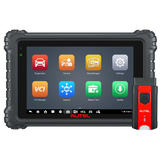
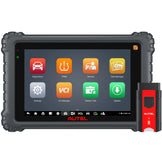
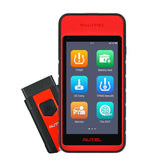
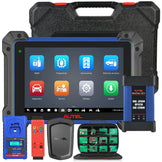
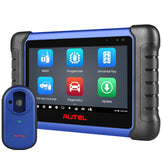
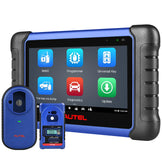
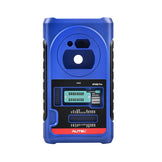
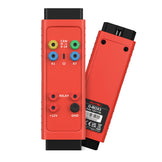
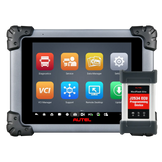
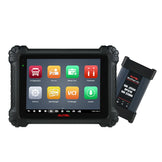
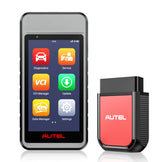
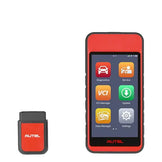
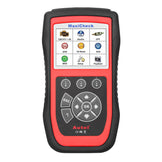
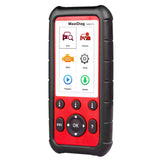
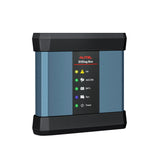
| Tools Needed | Basic cloning tool (e.g., Autel AT100). | Advanced key programmer (e.g., Autel IM508S, IM608). |
| Vehicle Access | Often does not require access to the car (just the working key). | Requires connection to the car’s OBD port. |
| Use Cases | Duplicate a key when a working key is available. | Add new keys, replace keys when all are lost, or change ECUs. |
| Security | Limited to cloneable chips; encrypted chips may not be cloned. | Full support for all types (if supported by the tool). |
| Speed | Faster and simpler—ideal for quick duplicates. | Slower but more complete and reliable for complex security updates. |
| Compatibility | Only works with cloneable chips (e.g., ID46, some ID48). | Works with most vehicles if supported by the tool. |
| Start the Car (Immobilizer) | ✅ Yes (replicates the original key’s authorization). | ✅ Yes (registers the new key with the ECU). |
| Remote Lock/Unlock | ❌ No (cloning only copies transponder data, not remote functions). | ✅ Yes (requires separate remote programming to sync lock/unlock features). |
| Works Without OBD | ✅ Yes (no need to connect to the car’s OBD port). | ❌ No (OBD connection is usually required). |
Autel-Supported Key Cloning Protocols
For auto locksmiths using Autel equipment, key cloning is supported across a wide range of transponder protocols. Currently, Autel devices support key cloning for the following chip types:
- ID11, ID12, ID13
- ID46, ID47, ID48, ID49
- ID4A, ID4C, ID5C, ID4D
- ID64, ID8A, ID8C
- MQB
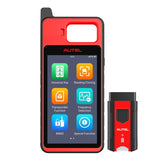
These protocols cover a vast number of vehicle makes and models, making key cloning a go-to solution for many duplicate key requests. As seen in the screenshots from Autel tools (like the KM100), the interface clearly lists supported transponder cloning options, making it easy to select the right protocol for the job.
How to Access Key Cloning Menus on the Autel KM100
If you’re using the Autel KM100 to perform key cloning, accessing the function is simple. Follow these steps:
- Power on your KM100 device and wait for the home screen to load.
- From the home screen, select “Transponder Functions” to access transponder-related tools.
- Choose “Transponder Clone” from the menu to initiate the cloning process.
- Place the original working key in the designated slot (or on the antenna area) as instructed on the screen.
- Follow the on-screen prompts to read the transponder data from the original key and clone it to the new key.
This streamlined workflow ensures that even less experienced technicians can perform reliable key cloning with the KM100, reducing errors and saving time on service calls.
Real-World Examples of Key Cloning
To see key cloning in action, check out these step-by-step demonstrations on YouTube:
These videos showcase how cloning works in practice, from selecting the right protocol to verifying the new key’s functionality.
Final Thoughts: Choosing the Right Method for the Job
When deciding between key cloning and key programming, the choice boils down to your specific needs:
- Use key cloning if you have a working key and need a quick, reliable duplicate. It’s fast, cost-effective, and ideal for most standard duplicate key requests.
- Use key programming if you’ve lost all keys, need to replace an ECU, or require remote lock/unlock functionality. It’s more comprehensive but requires advanced tools and OBD access.
For auto locksmiths, investing in versatile equipment like Autel’s cloning and programming tools ensures you can handle both scenarios, expanding your service offerings and building trust with customers. Whether you’re cloning a key for a repeat client or programming a new key after a total loss, understanding these methods is the foundation of modern automotive security service.
Autel Key Programmers make car key coding fast and easy. Program new keys, duplicate remotes, and handle smart keys for most vehicles with precision and reliability. Trusted by mechanics worldwide, these tools save time and reduce errors. Explore our Autel key programmer collection today!