
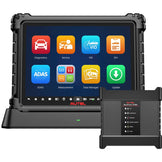
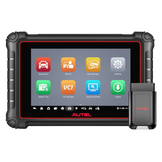

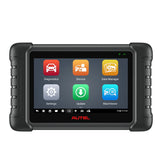

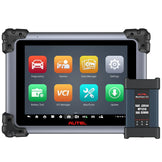















A topology map in automotive diagnostics is a visual representation of a vehicle's electronic control modules and communication network. Instead of viewing each ECU individually, technicians can see supported modules and their diagnostic status in a single graphical interface.
As modern vehicles contain more electronic systems, automotive topology mapping can help technicians understand how modules are connected, identify faults more quickly, and navigate complex diagnostic systems more efficiently.
How Does Automotive Topology Mapping Work?
During a vehicle scan, a compatible diagnostic scanner communicates with supported electronic control modules. Instead of displaying the results only as a traditional module list, the scanner can organize the information into a graphical vehicle topology map.
Depending on the vehicle and diagnostic platform, modules may be displayed according to their location or communication relationship within the vehicle network. Diagnostic status indicators can help technicians quickly identify modules with stored trouble codes or communication issues.
Why Is a Topology Map Useful for Automotive Diagnostics?
Traditional diagnostic scanners often display vehicle systems as a text-based list. While this provides useful information, technicians may need to open individual modules to understand where faults are located.
A topology map diagnostic scanner can make this process more intuitive by presenting vehicle modules visually. This is especially useful on newer vehicles with a large number of ECUs and increasingly complex communication networks.
1. Faster Fault Identification
A topology map allows technicians to quickly identify which supported modules have detected faults. Instead of checking each control module individually, the technician can use the graphical overview to focus on systems that require attention.
2. Better Understanding of Vehicle Networks
Modern vehicles may contain dozens of interconnected control modules. Topology mapping helps technicians visualize these systems and understand how different modules relate to the overall vehicle network.
3. More Efficient Diagnostic Workflow
By combining module status, fault information, and navigation in one interface, topology mapping can reduce the time required to move between vehicle systems during diagnosis.
Topology Map vs. Traditional Module List
| Feature | Traditional Module List | Topology Map |
|---|---|---|
| Module Display | Text-Based List | Graphical Layout |
| Fault Overview | Module-by-Module | Visual Status Overview |
| Network Visualization | Limited | Available on Supported Vehicles |
| Diagnostic Navigation | Manual Selection | Direct Visual Navigation |
| Best For | Basic System Access | Complex Vehicle Diagnostics |
* Topology mapping availability, layout, module coverage, and diagnostic functions vary by vehicle manufacturer, model, year, system, and diagnostic scanner.
Is Topology Mapping the Same as a Full-System Scan?
Not exactly. A full-system scan refers to scanning supported vehicle control modules for diagnostic information and trouble codes. A topology map is a way of visually presenting supported modules and scan results.
A diagnostic scanner may support full-system diagnostics without offering topology mapping. More advanced diagnostic platforms may combine both features, allowing technicians to perform a comprehensive vehicle scan and then view the results through an interactive topology interface.
What Features Should You Look for in a Topology Diagnostic Scanner?
Topology mapping is useful, but it should not be the only feature considered when choosing a professional diagnostic scanner. Depending on your repair needs, you may also want to compare:
For technicians performing advanced electrical diagnostics, oscilloscope capability can also be valuable. Some professional diagnostic platforms include oscilloscope functionality directly, while others can be paired with compatible automotive oscilloscopes for waveform testing and electrical system analysis.
Which Autel Scanners Support Topology Mapping?
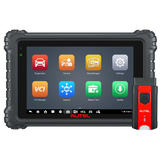
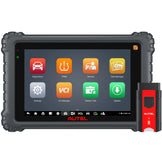
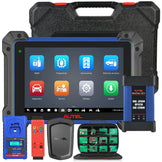
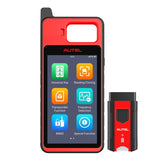
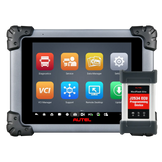
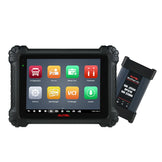
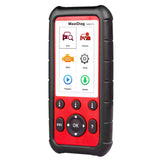
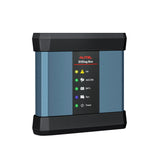
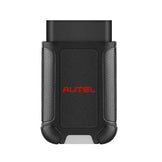
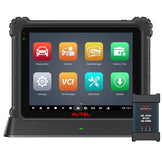
Selected Autel professional diagnostic platforms support Topology Mapping on compatible vehicles. Availability varies by scanner model, vehicle manufacturer, model year, region, and software coverage.
If topology mapping is an important feature for your workshop, check the individual scanner specifications and vehicle compatibility before purchasing.
Frequently Asked Questions
What is a topology map in automotive diagnostics?
A topology map is a graphical representation of supported vehicle control modules and their diagnostic status. It helps technicians visualize the vehicle's electronic network and identify modules that may require further diagnosis.
What is automotive topology mapping?
Automotive topology mapping is the process of displaying supported vehicle ECUs and communication relationships in a visual diagnostic interface instead of only using a traditional module list.
Is topology mapping the same as a full-system scan?
No. A full-system scan checks supported vehicle modules for diagnostic information, while topology mapping visually presents supported modules and scan results. Some professional scanners support both functions.
Do all diagnostic scanners have topology mapping?
No. Topology mapping is generally available on selected professional diagnostic scanners and supported vehicles. Feature availability varies by scanner model and vehicle.
Why is topology mapping useful?
It can help technicians identify faults faster, understand complex vehicle networks, and navigate supported electronic control modules more efficiently.